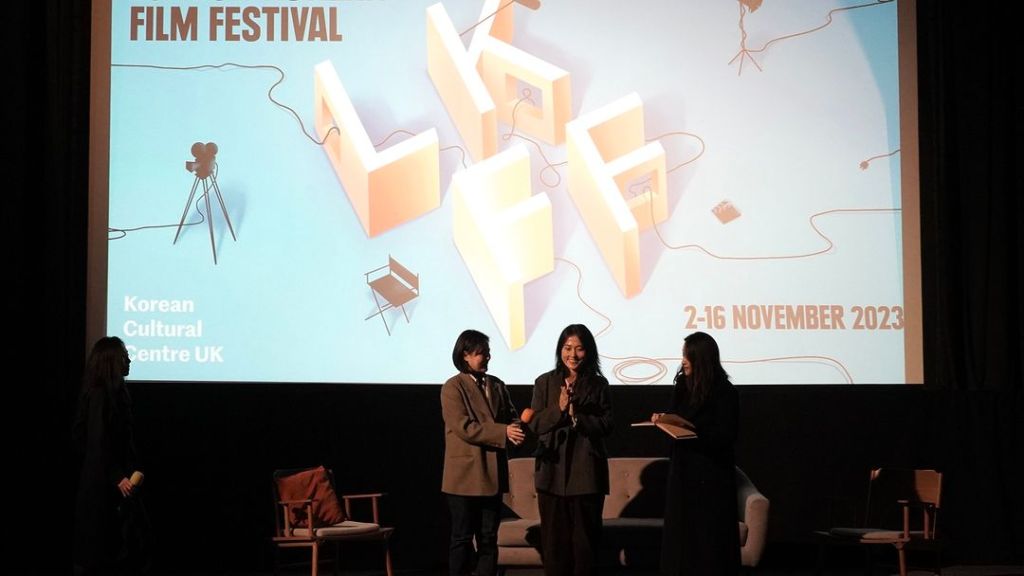
A relationship between a mother and daughter is something that can only truly be understood by those who experience it firsthand. It is a lifelong bond that can sometimes be strained by generational differences. At this year’s London Korean Film Festival, we at K-pop Bangsong had the pleasure of attending a screening that was held for four short films, as part of their Women’s Voices Shorts program, along with a Q&A from the Director An Sunyou and Actor Oh Jihoo of the film My Little Aunt. Three of these films explored the intricate dynamics of the relationship between mothers and daughters. Despite their brevity, they managed to capture the complexities of love, respect, discomfort, and understanding that exist within familial bonds.
Since the recent surge in the popularity of Korean pop culture and Korean cinema, minor- more relatable stories especially female-centric ones often go unnoticed and get overshadowed by popular releases created by famous directors. The stories presented at this year’s event are deeply grounded, and eye-opening, evoking a sense of lasting impact to the audience.
MY LITTLE AUNT – DIRECTOR: AN SUNYOU
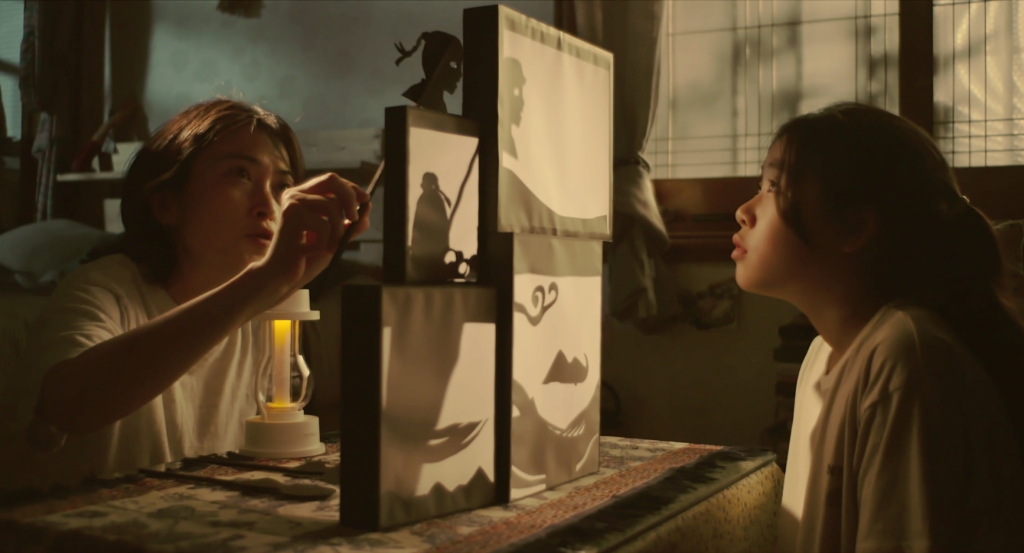
Inspired by her own story, An Sunyou’s My Little Aunt, set in the summery backdrop of Jeju Island, is a poignant narrative of finding oneself amid societal pressures and expectations. 12-year-old So-young forms a close friendship with her unconventional and free-spirited aunt Ji-ran, despite her traditional mother’s disapproval. The film explores the challenges that come from generational differences, particularly regarding the journey of womanhood and how women strive for independence and happiness on their terms, despite the discontentment they face from the men in their lives.
An interesting plot device is a bra, that centred many scenes within the films, particularly the second scene when So-young’s mother tells her she’s ready to wear one since she’s becoming a woman now and to be modest for when the older men of the family come to visit. Ji-ran is the cool aunt, with tattoos, who does street performances and puppet shows and the one who doesn’t wear a bra. The bra works as a symbol of this perfect portrayal that women in Korea must uphold. Ji-ran is the opposite of that, and we see it when she and her sister clash with each other regarding their personal life choices and the impact it has on So-young who’s still growing.
The film’s strengths lie in its portrayal of subtle yet profound changes in So-young’s conservative mother. Through her character arc, the film subtly explores her acceptance of Ji-ran’s way of life, while dealing with the evolving dynamics of the family.
Ultimately, the film offers a tender portrayal of the endearing relationship between So-young and her free-spirited aunt and the conflicts that arise between traditional values and personal freedom. The depiction of the unconventional character of Ji-ran influences So-young’s perception of the world, and how it shapes her understanding of personal agency.
MY ANNOYING MOTHER – DIRECTOR: LEE HYEJI
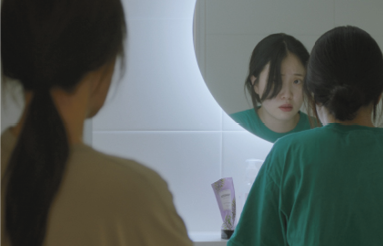
My Annoying Mother presents a compelling narrative that revolves around Ga-young, a determined film student with aspirations of becoming a director but has a strenuous relationship with her mother due to Ga-young being in school for 7 years. The film explores the complex dynamics between familial expectations and personal aspirations. As tensions between the two grow, Ga-young’s ambition is constantly diminished by her mother’s discouragement and belittling by statements such as calling her “untalented” and a person with an “uncertain future”.
The film doesn’t shy away from showcasing the yelling and fighting between the two characters. Instead uses it as an inspiration for Ga-young to incorporate into her film. Throughout the film, Ga-young is stuck in a loop of never being able to finish her final day of shooting because of heavy rain and crew members leaving. Finally, she reluctantly asks her mother for help, and her mother agrees but remains sceptical. Whilst filming the mother realizes that the scene is a line-by-line copy of their previous arguments. What My Annoying Mother does so well is that it uses what we as audiences have seen throughout the film and uses it against the characters, holding a mirror to their actions, so they learn to appreciate each other and see all the hurt that has been caused. Towards the end, Ga-young finishes her film and even screens it with her mother present.
The film effectively conveys the emotional impact of conflicting ambitions within families and the portrayal of the mother-daughter bond in a nuanced way. While the meta ‘film within a film’ trope may seem overplayed, Lee Hyeji uses it in a way that evokes empathy for the characters, showing their complexity and personal growth as they try to understand each other’s lives and perspectives.
A ROOM OF TWO WOMEN’S OWN – DIRECTOR: HUI-JOAN JIYEY
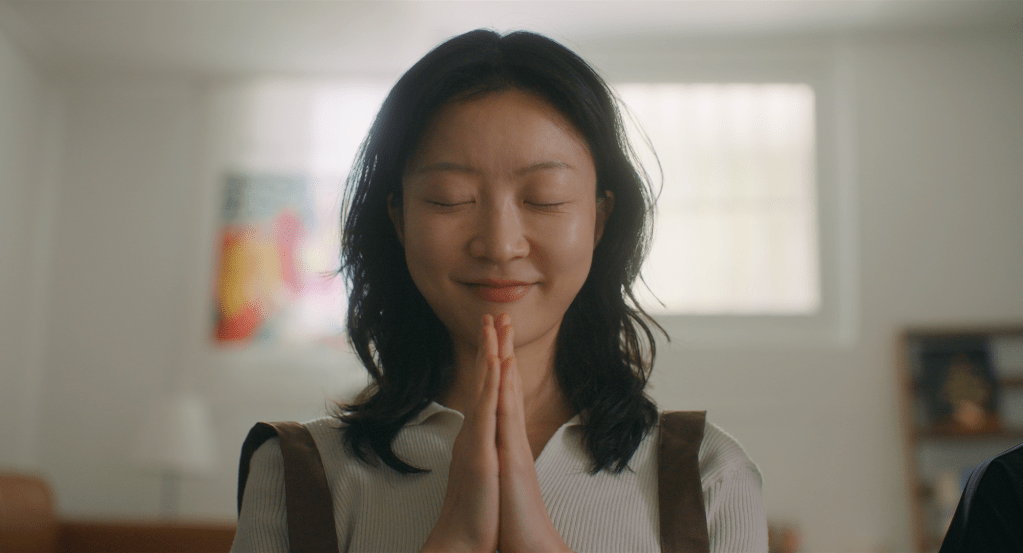
A stunning horror-fantasy drama narrated from the perspective of our protagonist, Ji-young a young writer who recently moved into her own house and finds it difficult to keep it clean whilst focusing on her work. The more she writes, the more her house becomes a chaotic mess. Whilst in the middle of her writing marathon, her mother calls to check if she’s keeping her house clean to which Ji-young responds that, living with a ghost is better than living with her mother. A Room of Two Women’s Own explores the complicated love-hate relationship between mother and daughter and what it means to take care of one another through gestures rather than words.
The entire film takes place in Ji-young’s apartment. The location itself plays a significant role in the story and serves as a major plot device for us to see who Ji-young is as a person. With her endless Post-its covering the walls of her bedroom, the pile of books on the floor and shelves, and the presence of a lonely ghost named Mu-myoung, who resides in the closet carrying a red tote bag around her neck.
The film’s focal point lies in the tumultuous dynamic between Ji-young and her mother. As Ji-young’s mother comes over to clean the house, she finds it spotless. However, the situation quickly escalates into an argument that reveals the complex dynamics of their love-hate relationship. Ji-young’s initial anger towards her mother’s inquiry about cleanliness highlights the complicated emotions that are intertwined within their bond. Her mother tries to use cleanliness as an excuse to persuade Ji-young to move back home. A Room of Two Women’s Own creates a nuanced space for contemplation, inviting the audience to reflect on the nature of care, and the intricacies of familial ties, with a twist of a ghost story as a symbol for independence.
Each of the films served as a thought-provoking exploration of the mother-daughter relationship against the backdrop of the human experience, unravelling the threads of domesticity, personal agency, freedom, and ambitions.
HOW TO GET YOUR MAN PREGNANT – DIRECTOR: GYEONG-MU NOH
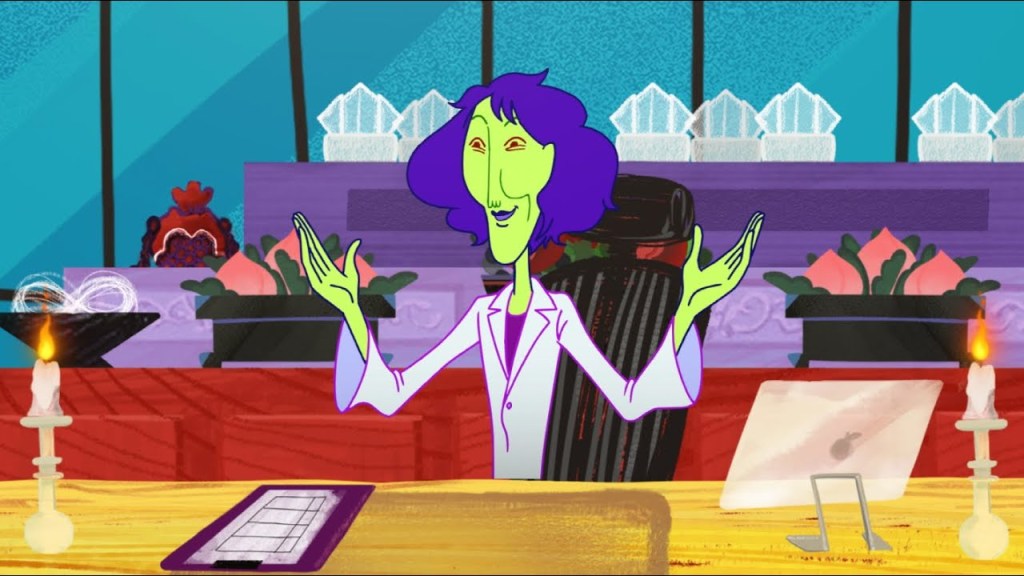
The last film that was screened took a step away from mothers and daughter but still focused on what it is to be a parent and how that process comes. Taking inspiration from Korea’s fertility rate issues, comes a unique and thought-provoking animated short that explores the concept of male pregnancy. “How to Get Your Man Pregnant” revolves around Yujin and Jeonghwan, a couple struggling with conception and IVF, who encounter a technology that allows men to bear children. The story follows Jeonghwan’s internal struggle and worries for the future, adding depth to the storyline by reversing the stereotypical gender roles.
Visually “How To Get Your Man Pregnant” is a striking work of art, with its vivid and bold neon colours and intricate doodle-like art style that captivate the eyes. As the story unfolds, we get a glimpse of Jeonghwan’s journey and his encounters with other men who have gone through pregnancy, portrayed in an animated mixed with live-action sequence.
Despite the heavy subjects the film is filled with comedic sequences often by the comical portrayals of Jeonghwan’s father- enthusiastic for his son continuing the family line and Dr. Kim- the villainous creator of the new technology pushing Jeonghwan towards pregnancy for the greater good despite the hesitations from Jeonghwan’s husbands’ peaks to the common notion of how women are held responsible to continue on their husbands names and ‘legacy’ and how this is done without supporting the individual throughout the process or after.
In conclusion, “How to Get Your Man Pregnant” is a hilarious yet tender animated film that offers a fresh and engaging perspective on pregnancy and parenthood. Through its compelling narrative, striking visuals, and nuanced exploration of societal norms, the film challenges audiences to reconsider rooted perceptions and engages with timely, thought-provoking themes. It stands as a testament to the power of storytelling to foster empathy, understanding, and critical dialogue on issues of both women’s and men’s place in society and the roles they decide to play.
Each of the films served as a thought-provoking exploration of the mother-daughter relationships, what it is to be a parent and the journey of womanhood in South Korea against the backdrop of the human experience, unravelling the threads of domesticity, personal agency, freedom, and ambitions. Despite cultural differences – anyone can find a part of themselves in these films. To end this with the quote from director An Sunyou:
“I wanted to have the next-generation character because if our generation is fighting in the middle, we hope that the next generation will have more opportunities to choose and to think for themselves and to decide on things for them in society.”
A huge thank you to all of the directors of the films and to London Korean Film Festival for giving us the opportunity to attend the event.
You can follow Reenad ‘Neena’ Afzal and her work on X or Instagram.


 K-pop Bangsong